

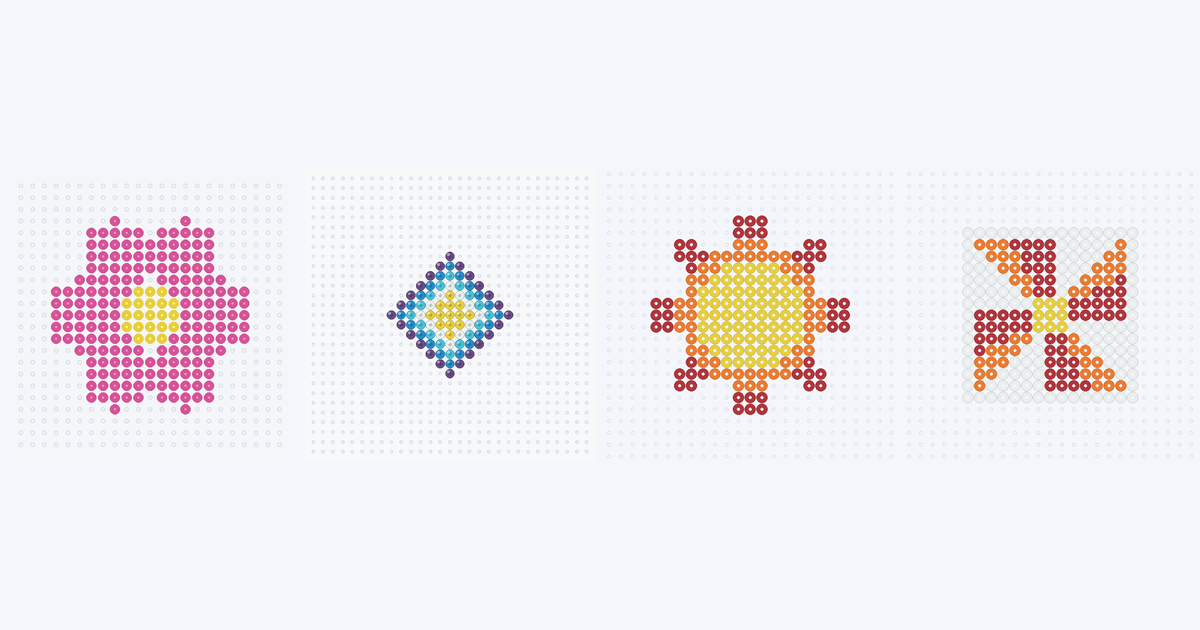
Choose the filled square pinwheel for a continuous coaster surface, or the sun for a round centre with rays. These 5 original Perler bead coaster patterns use 85–225 beads per chart. For Perler bead coasters, start with a solid, fully filled shape without holes: look for few empty cells inside the outline, then fill any interior gaps before fusing. Fused beads are plastic and are not guaranteed heat-proof; do not put hot cups directly on a coaster, and test with cool drinks first.
Make your own coaster pattern →
Choose a round or square-ish coaster motif
Open a card for its full chart and exact color counts. These are static reading charts; opening a card does not load an editable project into the maker. The sun and pinwheel are new original generic motifs. The flower, diamond and ladybug offer other compact outlines; the stemmed daisy and sunflower stay in the flower collection. Check the intended cup base against the finished piece: chart dimensions are cell counts, not a promise of cup fit.
Compare beads, colors and main-color share
The table starts with the fewest beads. Select the Beads heading to reverse the order. Main-color share is the largest color count divided by the total beads, multiplied by 100 and rounded to one decimal place. Empty cells are excluded from bead totals; grid dimensions describe the chart canvas.
| Motif | Grid | Colors | Main color · share | Difficulty | |
|---|---|---|---|---|---|
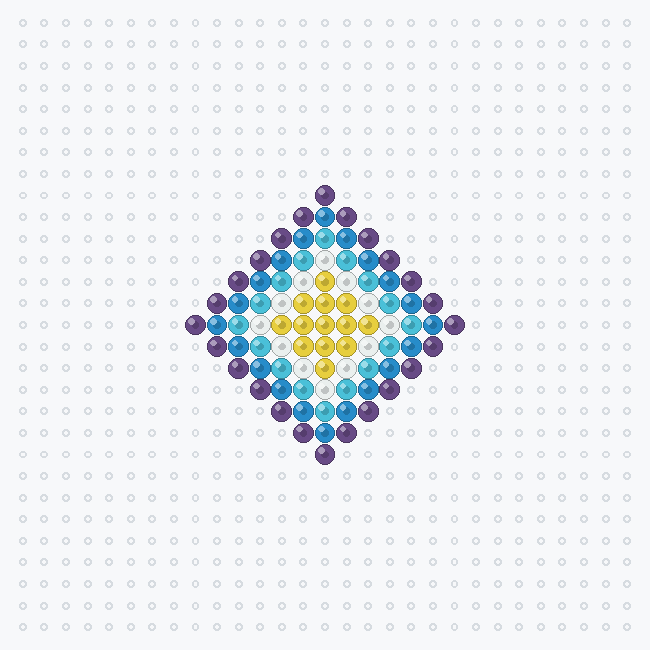
| Diamond | 15×13 | 85 | 5 | Purple · 28.2% | Easy |
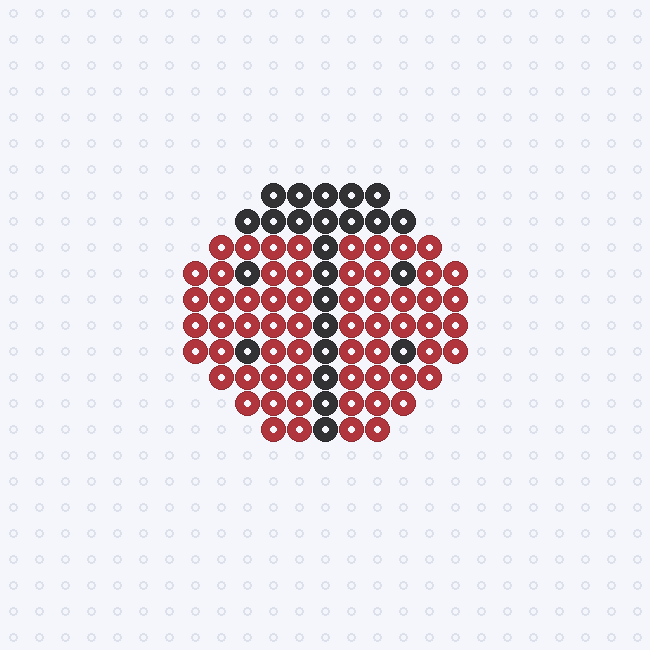
| Ladybug | 11×10 | 86 | 2 | Red · 72.1% | Beginner |
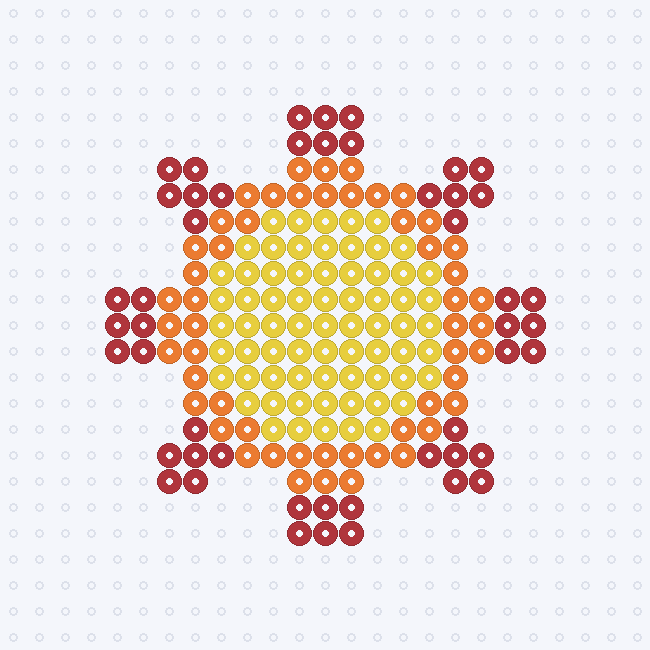
| Sun | 17×17 | 169 | 3 | Yellow · 40.8% | Easy |
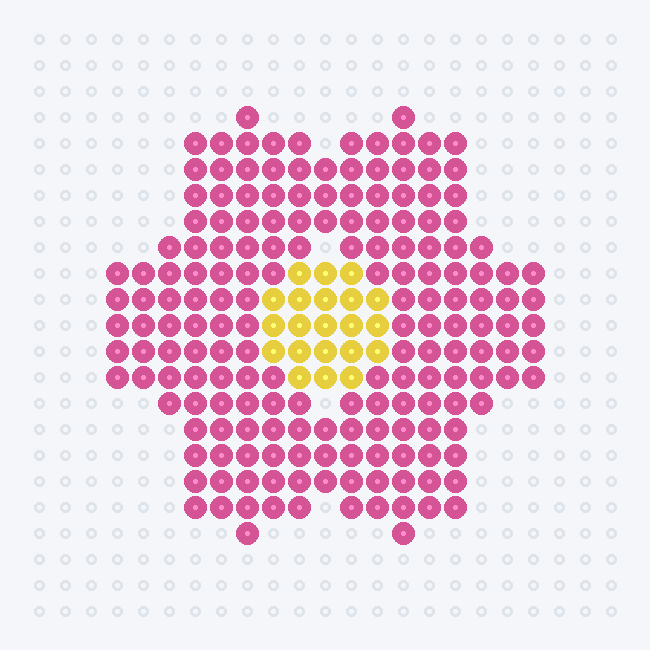
| Flower | 23×23 | 199 | 2 | Pink · 89.4% | Easy |
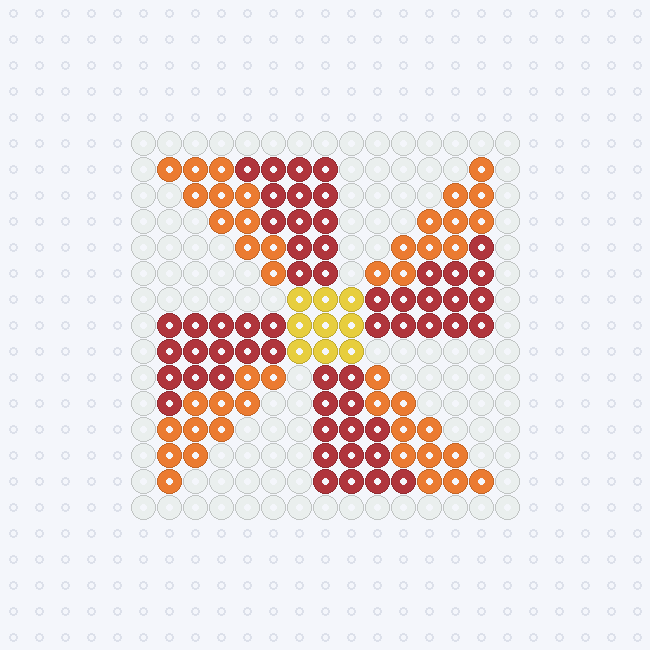
| Pinwheel | 15×15 | 225 | 4 | White · 51.6% | Easy |
White accounts for 116 of the pinwheel's 225 beads (51.6%). Those background beads are part of the filled square. The sun uses 169 beads on a 17×17 canvas; its empty cells are outside the outline, between the rays.
Per-motif color lists and codes
Counts below come from each chart's data. Names, codes and screen shades use the maker's Perler reference palette. Screen colors are approximations; compare them with your physical beads. BeadDraft is not affiliated with or endorsed by Perler.
Diamond bead pattern — 15×13
| Perler color | Code | Beads |
|---|---|---|
| Purple | 80-19007 | 24 |
| Light Blue | 80-19009 | 20 |
| Sky | 80-15216 | 16 |
| Yellow | 80-19003 | 13 |
| White | 80-19001 | 12 |
| Total | 5 colors | 85 |
Ladybug bead pattern — 11×10
| Perler color | Code | Beads |
|---|---|---|
| Red | 80-19005 | 62 |
| Black | 80-19018 | 24 |
| Total | 2 colors | 86 |
Sun bead pattern — 17×17
| Perler color | Code | Beads |
|---|---|---|
| Yellow | 80-19003 | 69 |
| Orange | 80-19004 | 52 |
| Red | 80-19005 | 48 |
| Total | 3 colors | 169 |
Flower bead pattern — 23×23
| Perler color | Code | Beads |
|---|---|---|
| Pink | 80-19083 | 178 |
| Yellow | 80-19003 | 21 |
| Total | 2 colors | 199 |
Pinwheel bead pattern — 15×15
| Perler color | Code | Beads |
|---|---|---|
| White | 80-19001 | 116 |
| Red | 80-19005 | 56 |
| Orange | 80-19004 | 44 |
| Yellow | 80-19003 | 9 |
| Total | 4 colors | 225 |
What to place first
- Sun: start with the Yellow disc, surround it with Orange, then place the Red rays. Match the colored cells across the centre column to keep the left-right mirror symmetry.
- Pinwheel: place the Yellow hub, then a Red and Orange vane. Rotate the chart a quarter turn to repeat it. Fill the remaining square with White beads; the background must not be left as empty pegs.
- Flower: place the Yellow centre, then count outward to form the Pink petals. Follow the gaps along the outer petal edge without introducing gaps inside the bloom.
- Diamond: locate the Yellow centre, then work outward through the surrounding rings. Count the diagonal steps at each corner against the chart.
- Ladybug: lay the Black head, centre line and spots first, then fill the remaining body with Red. Keep the rounded body filled rather than leaving gaps around the details.
Fusing a flat coaster
Use ironing paper and iron both sides. Press the fused piece flat under a heavy flat object while it cools. Start with a solid, fully filled shape without holes, and check that its centre rests flat before trying it under a drink.
Fused beads are plastic and are not guaranteed heat-proof. Do not put hot cups directly on a coaster. Test with cool drinks first, checking that the cup base sits within the filled area and rests steadily.
Make your own coaster pattern
- Choose your own drawing. Use an original round or square image, or one you have permission to adapt, then open it in the maker.
- Set the grid width. The maker accepts 12–120 cells across. Height follows the crop and is limited to 120 cells; a smaller width or a tighter crop may be needed for a tall image.
- Limit the colors. Generation allows up to 12 colors. Inspect the outline and the filled centre in the preview.
- Apply, then edit. Apply the preview before painting, erasing or replacing colors. Fill interior gaps, check that the beads form a connected piece, and read the updated counts.
- Export the confirmed chart. Download the PDF reading chart, PNG or CSV. Unapplied previews are not exported.
The PDF is a READING CHART — NOT 1:1, with color counts, symbols and board sections of up to 29×29 cells. Read it beside your pegboard. There is no calibrated bead-size or bead-type setting, and these gallery cards do not provide a direct editable-project import.