A keychain needs a small, flat design that holds together. These are 13 Perler bead patterns that fit within 15 beads on each side, from 46 to 163 beads. Three are new original keychain designs, the mushroom, balloon and cupcake; the rest are earlier BeadDraft charts that also fit. Every count comes from the actual grid, and empty pegs are not included.
Make your own keychain pattern →
13 patterns that fit a keychain
Charts are listed from fewest beads to most. Open a card for its full pegboard preview and color list. These are static reading charts; choosing a card does not load an editable project into the maker.
Sizes in beads and millimetres
A standard (midi) fuse bead is about 5 mm across, according to the Wikipedia article on fuse beads, so a chart that is n beads wide is roughly n × 5 mm before ironing. The sizes below use that nominal figure; the real piece depends on your beads and how long you iron, so measure one finished bead row before you plan a ring or a pocket fit.
The largest chart here is 75 mm on its longest side at the nominal size. The tallest, the balloon, is 14 beads, about 70 mm.
Where the ring goes
A split ring or clasp passes through the hole in a bead, so the bead you choose needs an open hole after ironing. The same Wikipedia article notes that, depending on how long the beads are ironed, their holes may or may not close up, so iron lightly and test the hole with the ring before you commit the whole piece.
- Choose a bead on the outer edge of the top of the design. In the new charts it is the top-centre bead: the mushroom's top Red bead, the balloon's top Light Blue bead and the cupcake's Red cherry.
- Pick one that is joined to beads on both sides. A bead with a neighbour on each side takes a pulling ring better than a lone tip.
- Fuse by laying the pegboard flat, covering it with parchment paper and moving a dry iron over it. That is the method the article describes; keep the passes short.
Exact colors, bead counts and grid sizes
Check your supplies before placing beads. Codes, names and screen colors come from the same 103-shade Perler reference palette used by the maker. Screen shades are approximations; compare them with the beads you own. BeadDraft is not affiliated with or endorsed by Perler.
| Perler color | Code | Beads |
|---|
| Red | 80-19005 | 46 |
| Total | 1 color | 46 |
| Perler color | Code | Beads |
|---|
| Blush | 80-19063 | 33 |
| Butterscotch | 80-19090 | 16 |
| Tan | 80-19035 | 15 |
| Total | 3 colors | 64 |
| Perler color | Code | Beads |
|---|
| Red | 80-19005 | 48 |
| Tan | 80-19035 | 20 |
| Yellow | 80-19003 | 8 |
| Total | 3 colors | 76 |
| Perler color | Code | Beads |
|---|
| Light Blue | 80-19009 | 73 |
| Toothpaste | 80-19058 | 2 |
| Grey | 80-19017 | 2 |
| Dark Blue | 80-19008 | 1 |
| Total | 4 colors | 78 |
| Perler color | Code | Beads |
|---|
| Red | 80-19005 | 53 |
| Blush | 80-19063 | 11 |
| Dark Green | 80-19010 | 6 |
| Kiwi Lime | 80-19061 | 14 |
| Total | 4 colors | 84 |
| Perler color | Code | Beads |
|---|
| Purple | 80-19007 | 24 |
| Light Blue | 80-19009 | 20 |
| Sky | 80-15216 | 16 |
| Yellow | 80-19003 | 13 |
| White | 80-19001 | 12 |
| Total | 5 colors | 85 |
| Perler color | Code | Beads |
|---|
| Blush | 80-19063 | 36 |
| Bubblegum | 80-19006 | 26 |
| Light Pink | 80-19079 | 20 |
| Red | 80-19005 | 3 |
| Total | 4 colors | 85 |
| Perler color | Code | Beads |
|---|
| Red | 80-19005 | 62 |
| Black | 80-19018 | 24 |
| Total | 2 colors | 86 |
| Perler color | Code | Beads |
|---|
| Red | 80-19005 | 28 |
| Blush | 80-19063 | 63 |
| Total | 2 colors | 91 |
| Perler color | Code | Beads |
|---|
| White | 80-19001 | 92 |
| Total | 1 color | 92 |
| Perler color | Code | Beads |
|---|
| Red | 80-19005 | 97 |
| Dark Green | 80-19010 | 5 |
| Brown | 80-19012 | 2 |
| Total | 3 colors | 104 |
| Perler color | Code | Beads |
|---|
| Light Pink | 80-19079 | 87 |
| Bubblegum | 80-19006 | 11 |
| Red | 80-19005 | 6 |
| Total | 3 colors | 104 |
| Perler color | Code | Beads |
|---|
| Yellow | 80-19003 | 142 |
| Black | 80-19018 | 21 |
| Total | 2 colors | 163 |
What works on a keychain
- Keep it to one piece. Every bead should touch a neighbour on a side, not only at a corner, so the piece does not snap where it hangs. All the new charts are one connected block of beads.
- Avoid long single-bead tails. A lone bead is the weakest joint. The balloon's knot and two-bead string are the most fragile part of these charts, so shorten or leave them off if the keychain will be used hard.
- Use a bold outline and two or three colors. At this size a clear silhouette reads better than fine detail, and fewer colors means less sorting.
- Prefer symmetry. The mushroom and cupcake are mirror-symmetric, so you can build one half and check it against the other. The balloon is symmetric apart from its highlight.
- Plan the ring bead first. Decide which edge bead takes the ring before you place colors, so you do not bury it in a detail.
How to make your own keychain pattern
- Choose a simple picture. A bold shape you drew, or a photo you took, works best. Small grids lose texture and fine lines.
- Set a narrow grid width. The maker accepts 12–120 cells across; height follows the crop. Its default is a 29-cell preset, which leaves a lot of grid for a keychain, so try a width near the low end and inspect the preview. Twelve cells is about 60 mm at the nominal size.
- Cap the colors. Generation allows up to 12 colors matched to the 103-shade Perler palette. Two or three suit a small design.
- Apply and edit. Apply the preview, then paint, erase or replace colors. Fix stray single beads and recount after any edit.
- Export the confirmed result. Download a PDF reading chart, PNG grid image or CSV bead list. Unapplied previews are not exported.
The PDF is a READING CHART — NOT 1:1: place it beside the board, not underneath as a life-size placement template. The controls work in grid cells; there is no bead type or diameter switch. See the photo-to-pattern walkthrough for the full workflow.
Open the pattern maker →


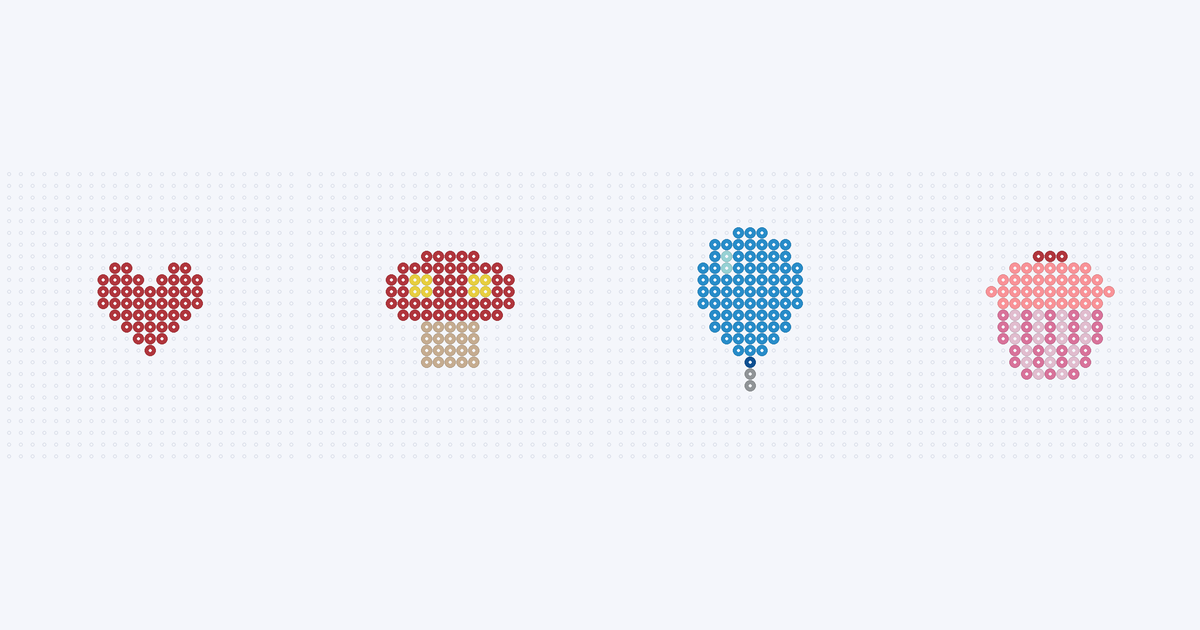
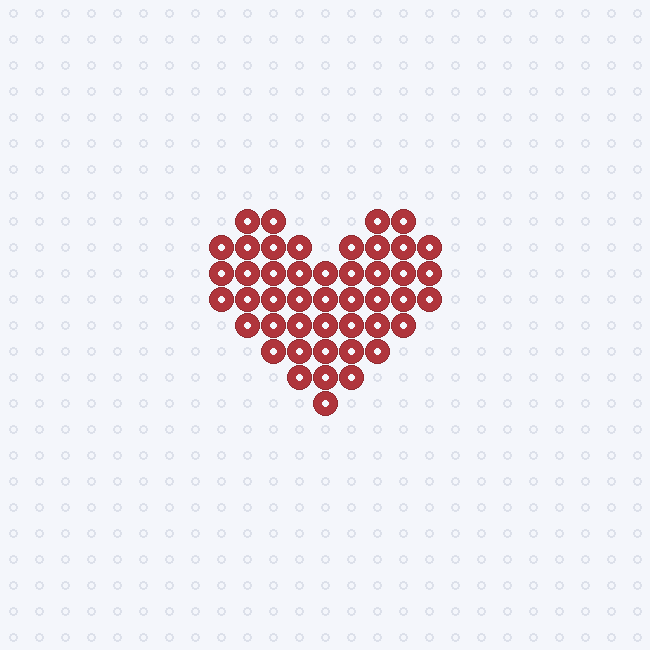 Mini heart bead pattern
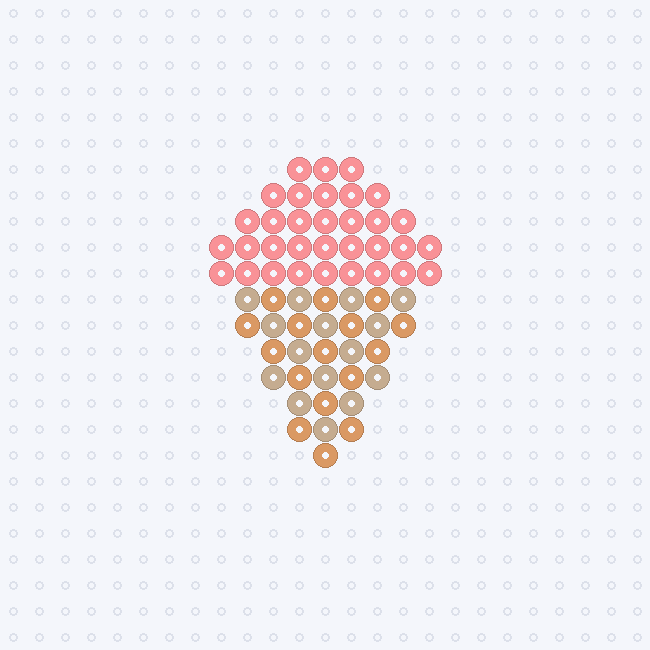 Ice cream cone bead pattern
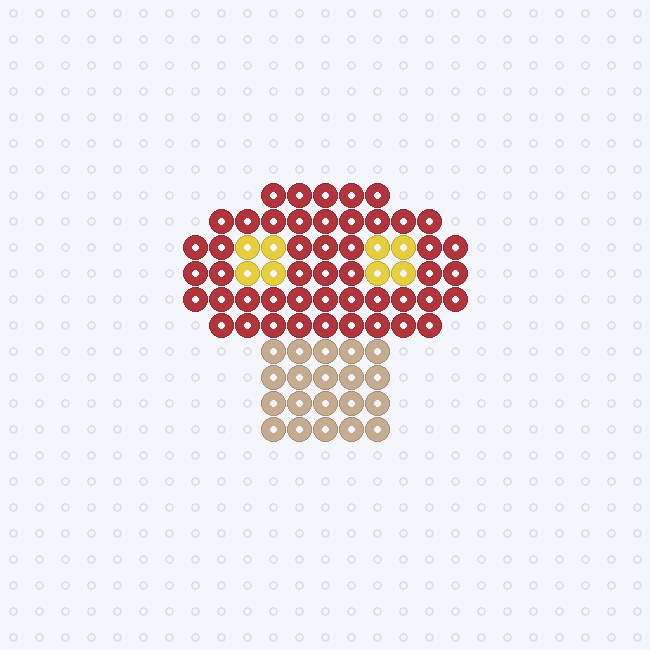 Mushroom bead pattern
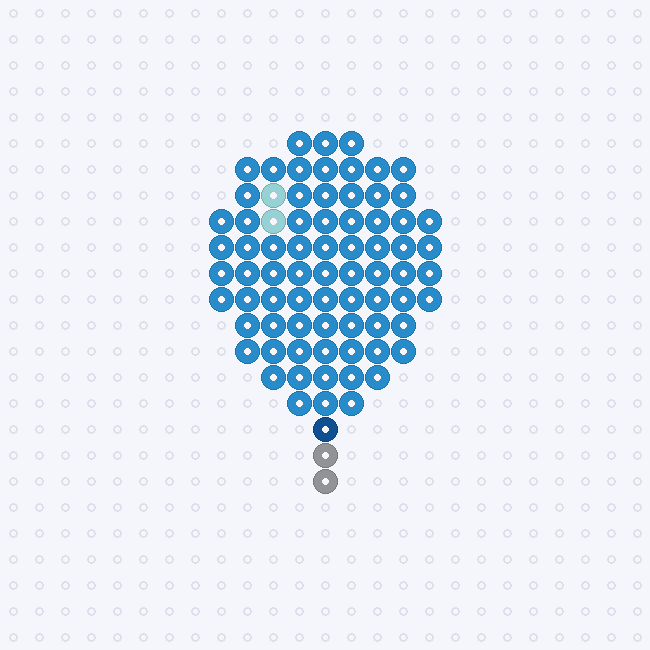 Balloon bead pattern
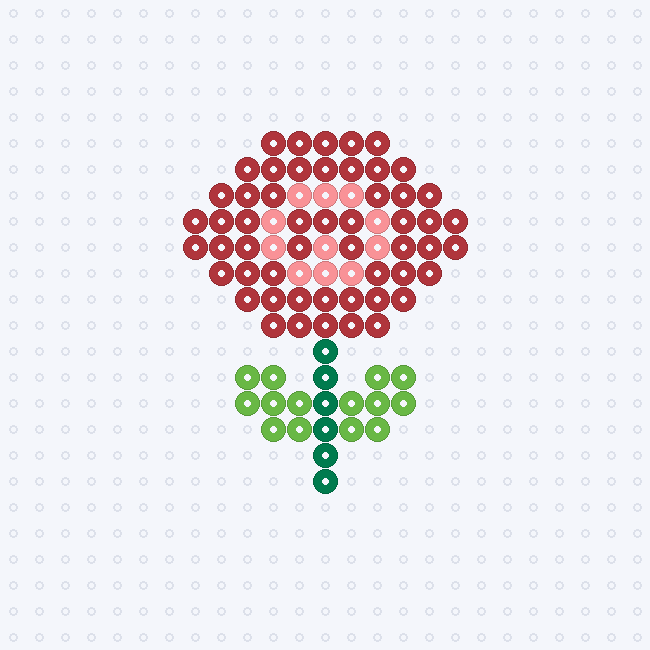 Rose bead pattern
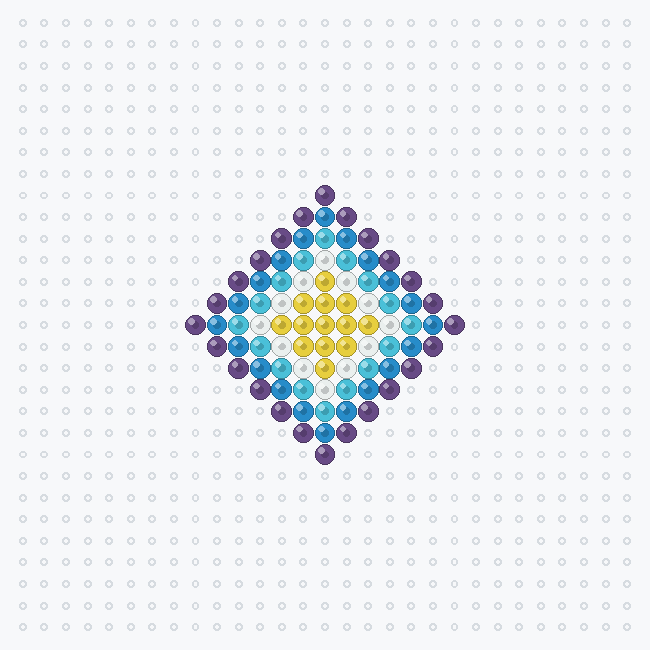 Diamond bead pattern
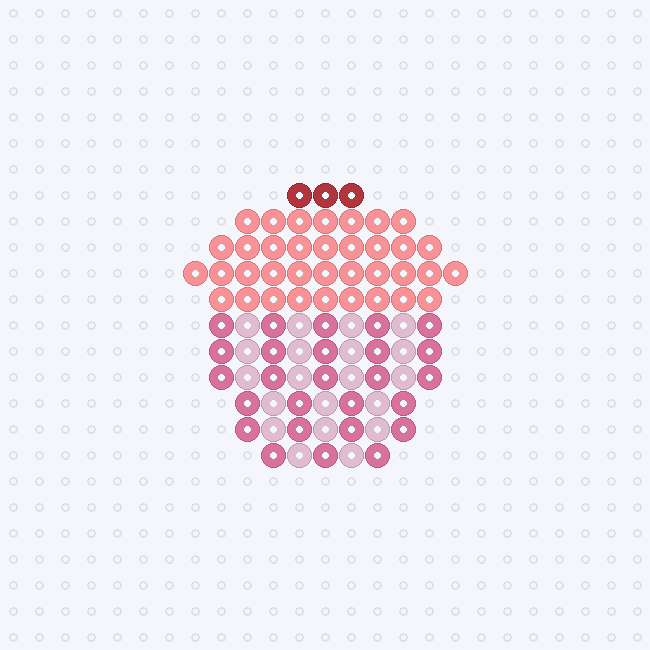 Cupcake bead pattern
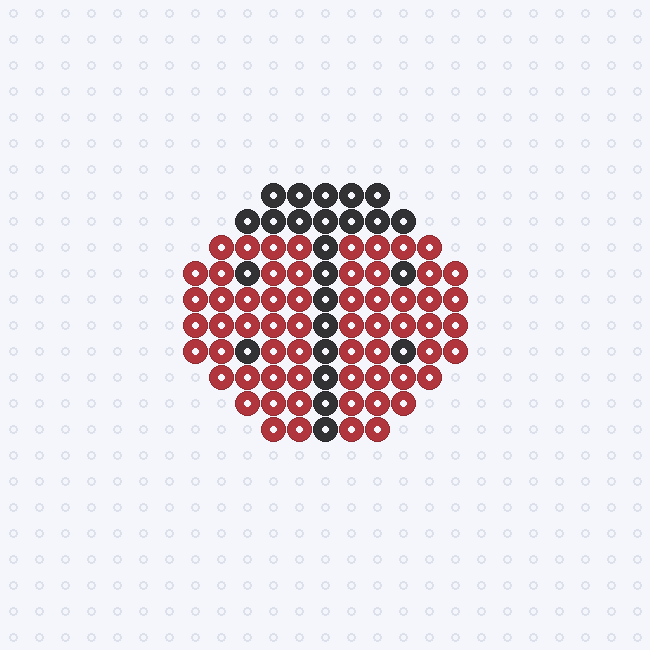 Ladybug bead pattern
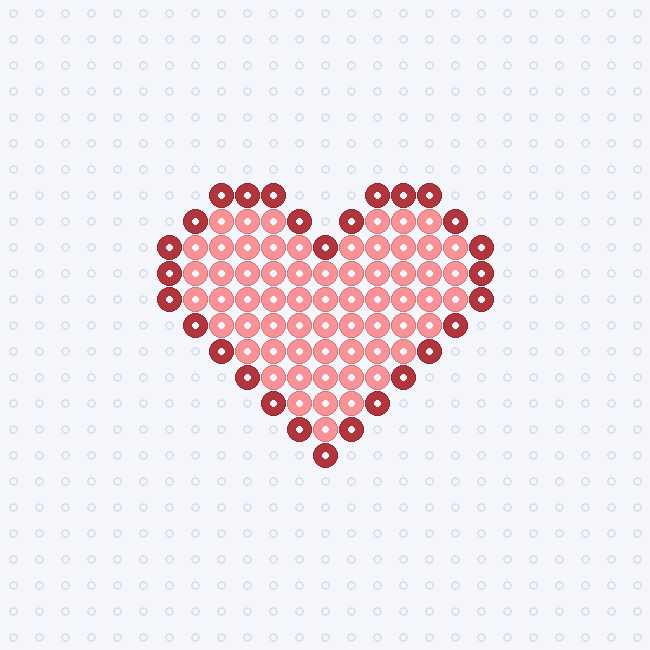 Two-tone heart bead pattern
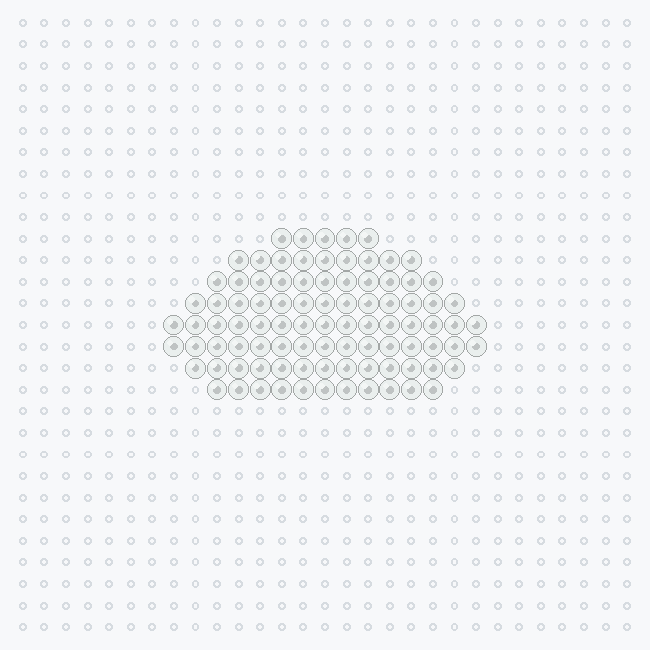 Cloud bead pattern
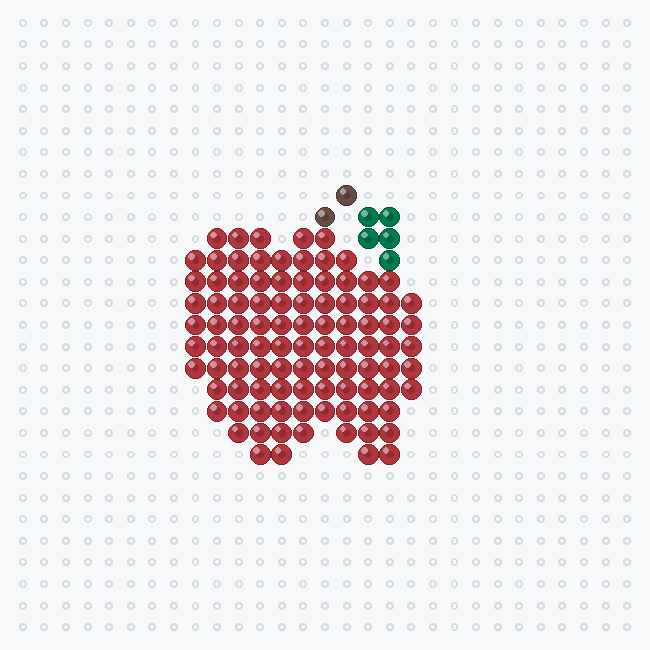 Apple bead pattern
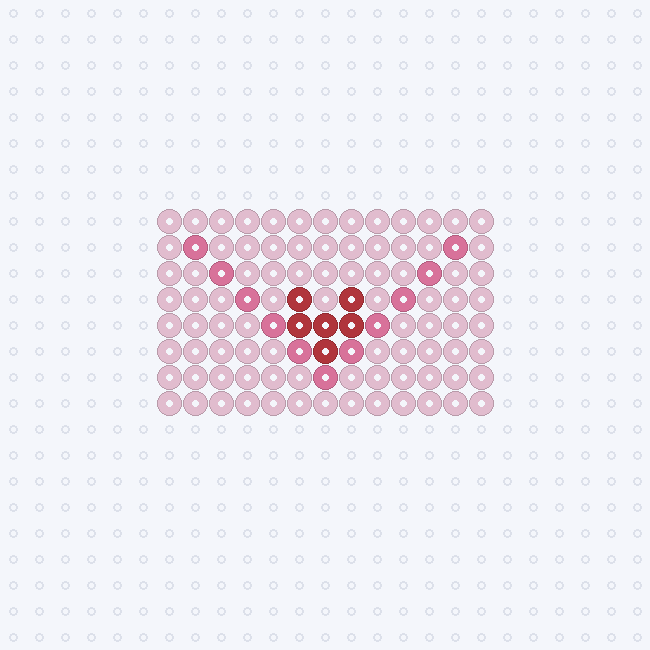 Love letter bead pattern
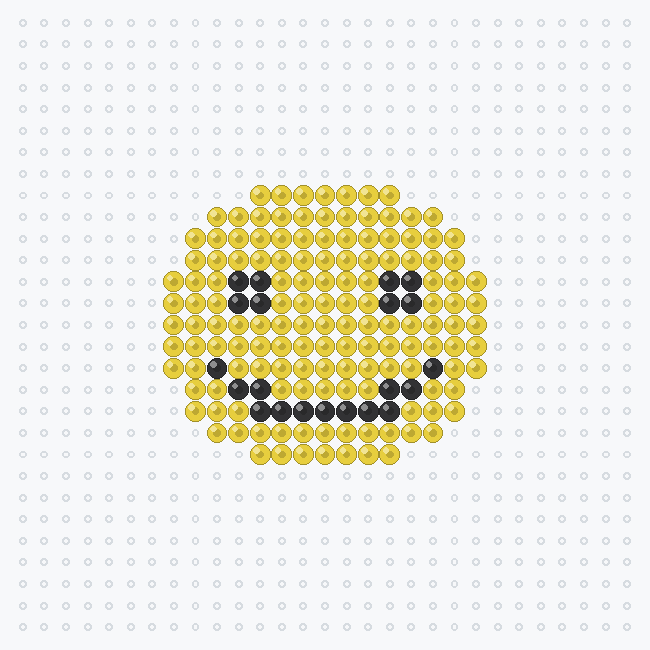 Smiley face bead pattern