

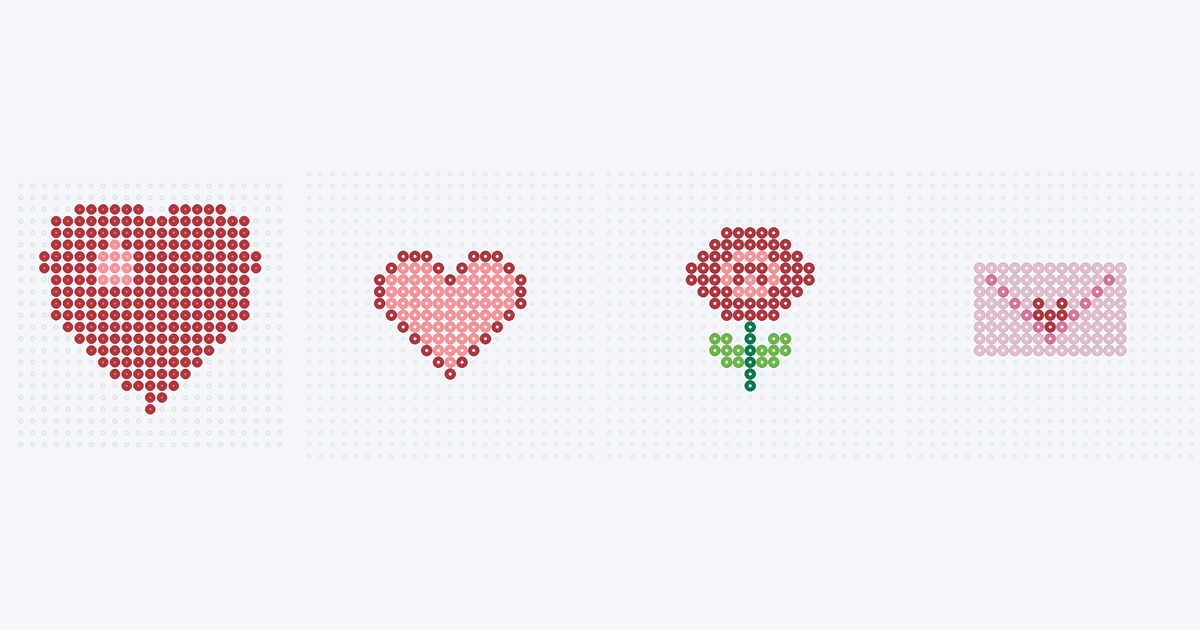
Start with the mini heart or the two-tone heart, then try the rose or the love letter. These are five original heart and Valentine Perler bead patterns of 46–231 beads each, with every count taken from the actual grid; empty pegs are not included. The full-size heart is the largest.
Make your own Valentine pattern →
Five heart and Valentine patterns to try
Charts are listed from fewest beads to most. Open a card for its full pegboard preview and color list. These are static reading charts; choosing a card does not load an editable project into the maker.
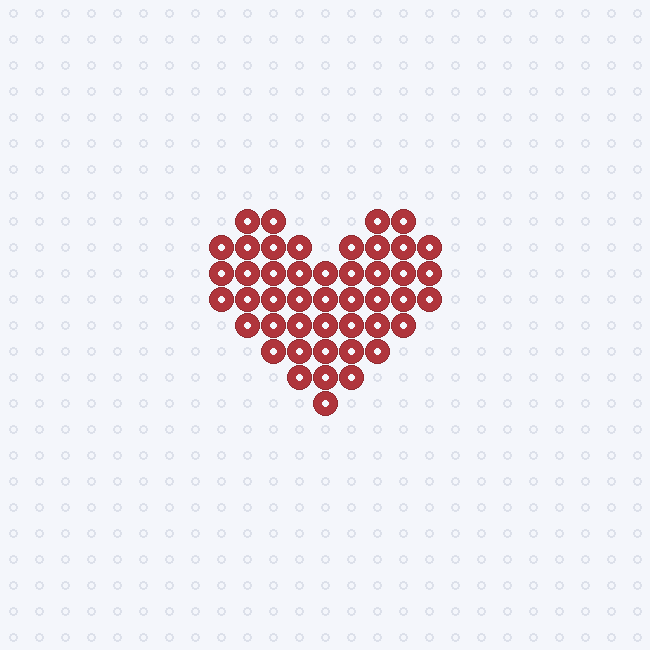 Mini heart bead pattern
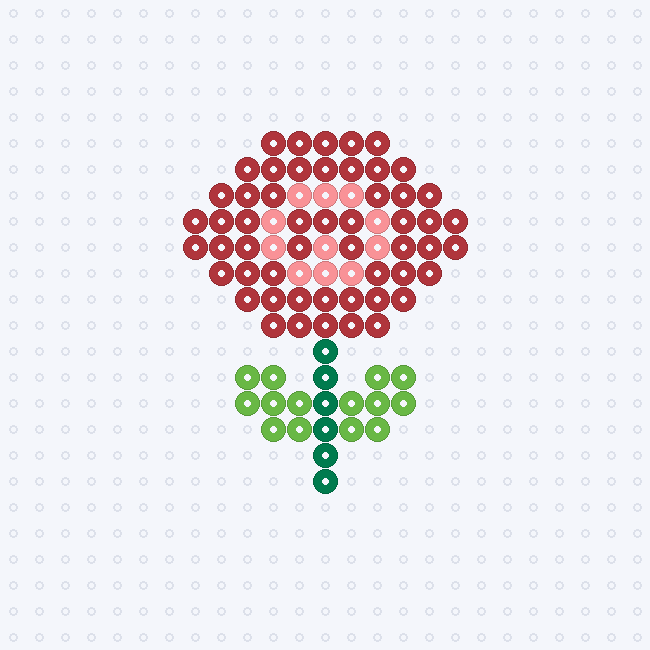 Rose bead pattern
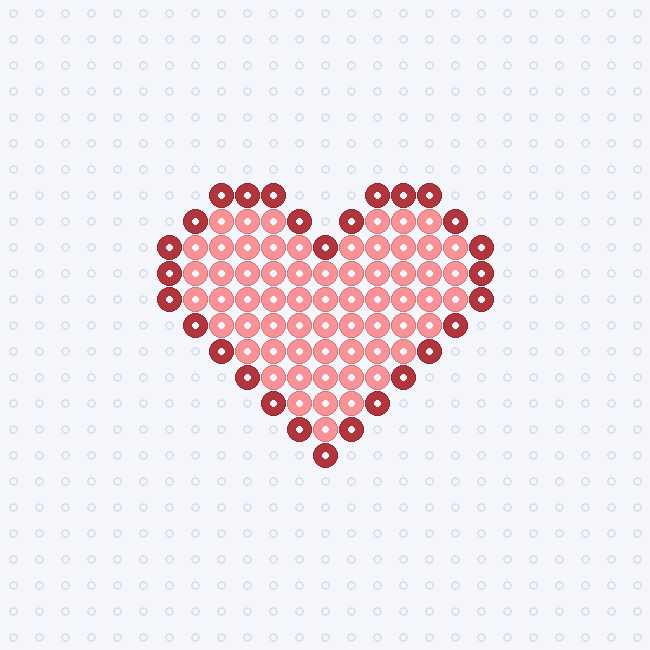 Two-tone heart bead pattern
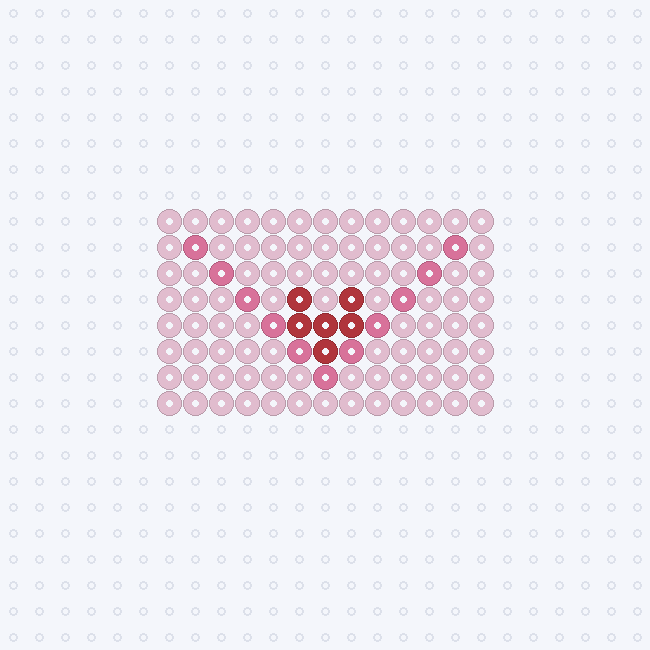 Love letter bead pattern
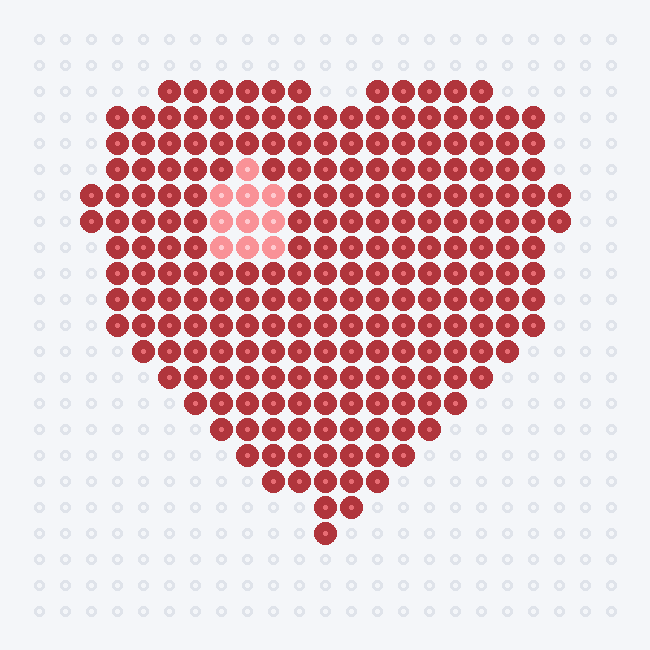 Heart bead pattern
- Mini heart: one color, no detail beads, the quickest start.
- Two-tone heart: a one-bead Red outline around a Blush fill. The outline is every bead that touches an empty peg.
- Heart: the full-size classic in Red with a Blush highlight, on a 23×23 grid.
- Rose: a Red bloom with a Blush swirl on a Dark Green stem with Kiwi Lime leaves. It has the most colors of the five.
- Love letter: a Light Pink envelope with Bubblegum flap lines and a small Red heart seal.
Sizes side by side
| Pattern | Grid | Beads | Colors |
|---|---|---|---|
| Mini heart bead pattern | 9×8 | 46 | 1 |
| Rose bead pattern | 11×14 | 84 | 4 |
| Two-tone heart bead pattern | 13×11 | 91 | 2 |
| Love letter bead pattern | 13×8 | 104 | 3 |
| Heart bead pattern | 23×23 | 231 | 2 |
Bead count is the clearest measure of how much a chart takes to place, because it counts every bead and ignores the empty pegs. A heart does not need a big grid to read well: the mini heart uses 46 beads, and the full-size heart uses 231.
Exact colors, bead counts and grid sizes
Check your supplies before placing beads. Codes, names and screen colors come from the same 103-shade Perler reference palette used by the maker. Screen shades are approximations; compare them with the beads you own. BeadDraft is not affiliated with or endorsed by Perler.
Mini heart bead pattern — 9×8
| Perler color | Code | Beads |
|---|---|---|
| Red | 80-19005 | 46 |
| Total | 1 color | 46 |
Rose bead pattern — 11×14
| Perler color | Code | Beads |
|---|---|---|
| Red | 80-19005 | 53 |
| Blush | 80-19063 | 11 |
| Dark Green | 80-19010 | 6 |
| Kiwi Lime | 80-19061 | 14 |
| Total | 4 colors | 84 |
Two-tone heart bead pattern — 13×11
| Perler color | Code | Beads |
|---|---|---|
| Red | 80-19005 | 28 |
| Blush | 80-19063 | 63 |
| Total | 2 colors | 91 |
Love letter bead pattern — 13×8
| Perler color | Code | Beads |
|---|---|---|
| Light Pink | 80-19079 | 87 |
| Bubblegum | 80-19006 | 11 |
| Red | 80-19005 | 6 |
| Total | 3 colors | 104 |
Heart bead pattern — 23×23
| Perler color | Code | Beads |
|---|---|---|
| Red | 80-19005 | 221 |
| Blush | 80-19063 | 10 |
| Total | 2 colors | 231 |
Making a heart look right in beads
- Build the outline first. A heart is recognised by its silhouette, so fix the two top bumps and the point before filling the inside. The two-tone heart is the clearest example, since its outline is one bead thick.
- Keep it symmetric. The four new charts are mirror-symmetric, so you can build one half and check it against the other. The full-size heart is the exception, because its highlight sits on one side.
- Watch the single-bead point. The tip of a heart is one bead wide, and a lone bead is the weakest joint in any narrow design.
- Use contrast for detail. The rose's swirl is Blush on Red, and the envelope's flap is Bubblegum on Light Pink. Two close shades of the same color are hard to tell apart on a pegboard.
These charts contain shapes only. For a name or a short word such as a message on a gift, see the bead letter banner page rather than adding letters by hand to a heart.
How to make your own Valentine bead pattern
- Choose a picture you can use. A simple drawing of your own, or a photo you took, works best. A bold outline matters more than fine detail on a small grid.
- Set the grid width. The maker accepts 12–120 cells across; height follows the crop, with a 120-cell height limit. Try the 29-cell preset first, then inspect the preview.
- Keep the colors distinct. Generation allows a cap of up to 12 colors matched to the 103-shade Perler palette. Two to four colors suit a heart or a rose.
- Apply and edit. Apply the preview, then paint, erase or replace colors. Mirror your edits when a design should stay symmetric.
- Export the confirmed result. Download a PDF reading chart, PNG grid image or CSV bead list. Unapplied previews are not exported, and edits change the counts.
The PDF is a READING CHART — NOT 1:1: place it beside the board, not underneath as a life-size placement template. The controls work in grid cells; there is no bead type or diameter switch. See the photo-to-pattern walkthrough for the full workflow.